
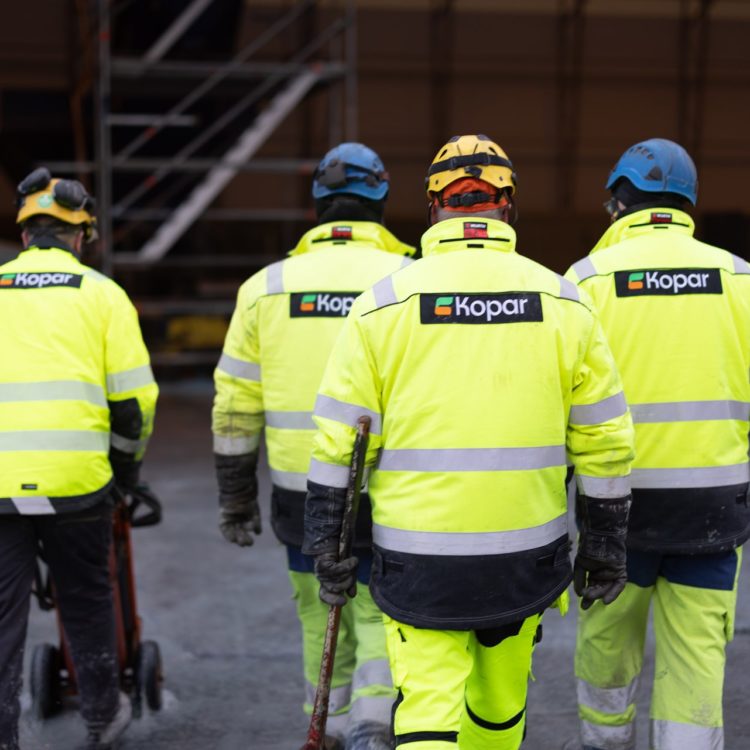
The ash conveyor and the coke conveyor are synonymous and there are no concrete differences between them. They are devices designed to move hot ash efficiently and safely in industrial environments. This article discusses the operation of the ash conveyor and the pile conveyor, their role in industry and the role of Kopar in the development of these systems. The reader can reflect on how these systems contribute to the efficiency of industrial processes and how they can help reduce environmental pollution.
What is an ash conveyor?
An ash conveyor is a device specially designed for the transfer of hot ash in industrial processes. Its primary purpose is to ensure the safe and efficient transfer of ash from one place to another, which is essential in power plants and other industrial production facilities. The ash conveyor often operates in a closed system, which helps to reduce dust and improve the cleanliness of the working environment.
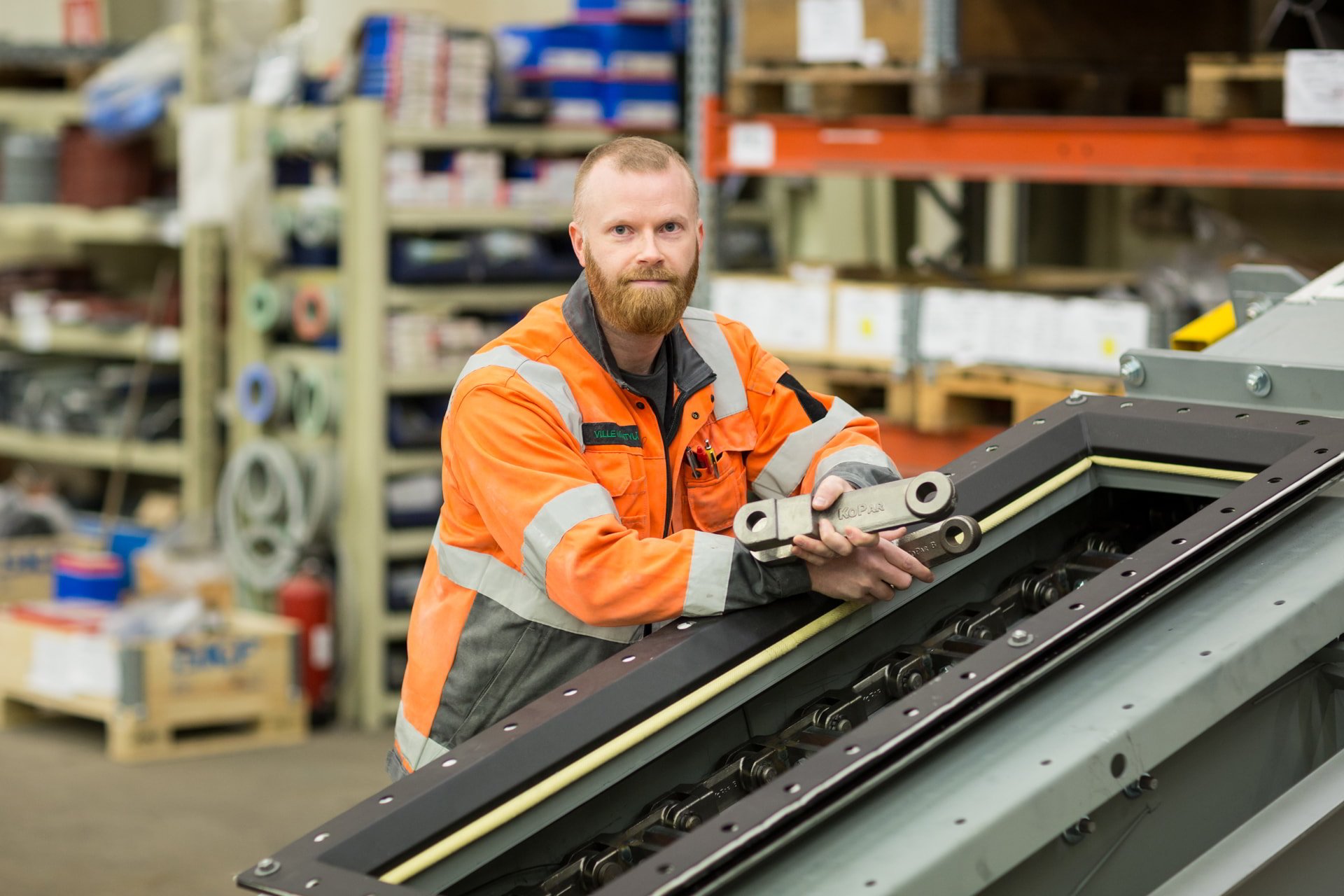
In practice, the ash conveyor is designed to withstand high temperatures and abrasive materials. It usually uses chains and conveyor systems made of durable materials, such as steel, to ensure its durability and reliability. The ash conveyor is an integral part of the process, helping to manage and recover the by-products of production.
The needs of different industries can vary, requiring the ash conveyor to be able to operate in both horizontal and vertical positions. This versatility makes it a valuable tool that can adapt to different production and environmental requirements.
What is a drag chain conveyor?
The triple conveyor is synonymous with the ash conveyor and works in the same context for the transfer of hot ash in industrial processes. Designed to withstand extreme conditions such as high temperatures and abrasive materials, the Kolakul conveyor has a simple but efficient design, making it a reliable choice for a wide range of applications.
The triple conveyor often has a modular design, which allows it to be tailored to the specific needs of different industrial plants. Its closed system reduces the spread of dust and splashes, thus improving the safety and cleanliness of the working environment. This makes cola conveyor solutions particularly attractive in space-constrained environments where efficient use of space is important.
The triple conveyor's reliability and low maintenance requirements make it a cost-effective solution for long-term use. Although the initial investment can be significant, the long life of the conveyor and low maintenance costs compensate for this over time.
How does the ash conveyor work in practice?
The ash conveyor consists of several technical components that together enable the safe and efficient transport of hot ash. One of the key components is the conveyor chain, which moves the ash forward in a closed system. This chain is often made of a particularly durable steel that can withstand high temperatures and wear.
The enclosed design is an important part of the ash conveyor's operation, as it reduces the spread of dust and improves the safety of the working environment. In addition, the ash conveyor can be equipped with a cooling system to help keep the temperature under control and protect the conveyor itself from thermal effects.
The technical design of the ash conveyor ensures that it can operate continuously without significant interruptions. This is important for industrial plants where continuity of production is key. The ash conveyor is designed to require minimal maintenance, reducing the risk of downtime and improving overall production efficiency.
Why is ash transfer important in industry?
Ash handling is a critical part of many industrial processes, especially in power plants and metal processing, where large quantities of hot ash are generated. The importance of ash transfer is highlighted in terms of production efficiency and safety, as it reduces the risks associated with the handling and storage of hot ash when properly implemented.
A properly implemented ash handling system will improve the energy efficiency of the plant and reduce the environmental impact. This is achieved, for example, by recovering energy from the ash or by minimising emissions from ash handling. Automation of ash handling also reduces the risk of human error and improves the overall controllability of the process.
The industry's sustainability goals are increasing the pressure to develop more efficient and environmentally friendly ash handling solutions. This requires innovative approaches and continuous development, which is key to maintaining the competitiveness of industries.
How can Kopar help with ash transplantation?
Kopar has decades of experience in the design and manufacture of industrial material handling solutions, and we specialise in the development of ash conveyors in particular. We offer customised solutions designed to meet the specific needs and requirements of our customers.
Our solutions for ash handling include both mechanical and pneumatic conveyor systems designed to optimise energy efficiency and reduce maintenance requirements. Our goal is to help our customers improve the profitability and reliability of their production processes.
Innovation and continuous improvement are at the heart of what we do, and we constantly strive to improve the performance and environmental performance of our products. At Kopar, we believe that high-quality solutions can contribute to the green transition of industry and reduce its environmental footprint, which is essential for achieving a sustainable future.
You have a challenge that needs solving?
Let us help! Contact us for more information about our products and services.