

What is a chain conveyor?
A chain conveyor is a material handling machine designed to move bulk material efficiently and continuously. Its basic components include frame blocks, conveyor chain, drive wheels, rails, and a gear motor. The chain conveyor is mainly used in industrial logistics on production lines where material flow control is critical.
The chain conveyor differs from other conveyor systems, such as belt conveyors, because it can handle dusty and fine materials and is well suited to demanding conditions. Its enclosed design allows dust control, making it an ideal choice for environments where cleanliness and safety are paramount.
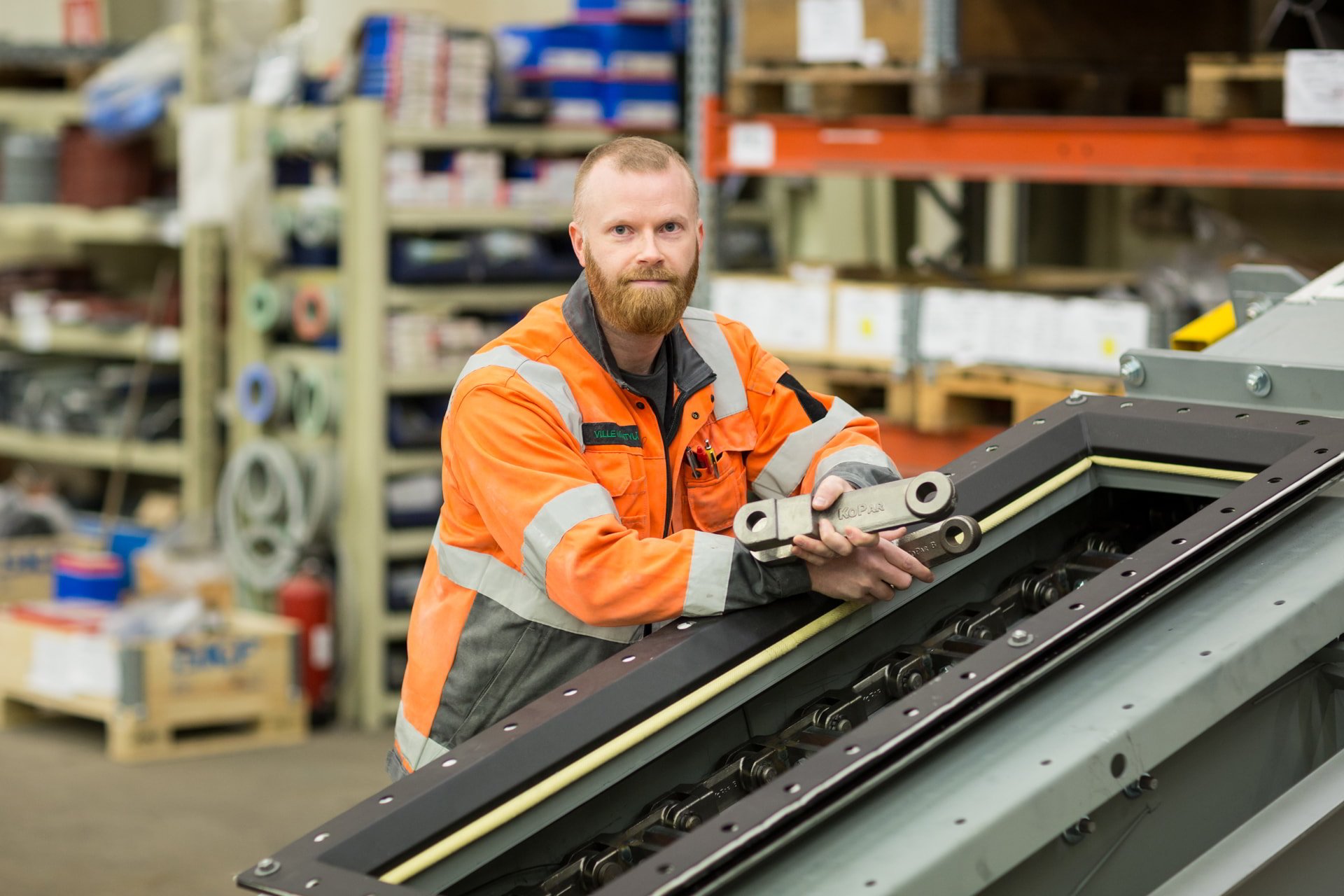
The conveyor chain is a key component of a chain conveyor, and its manufacture from a particularly durable steel, such as boron steel, ensures that the chain conveyor can handle large quantities of material efficiently and reliably.
How does a chain conveyor work?
The operating principle of a chain conveyor is based on the movement of the conveyor chain by means of drive wheels. The pulleys rotate a chain that moves the material. This movement is precisely controlled to ensure smooth and efficient transport.
Cooperation between the transport chain and the traction wheels is the key to efficiency. The chain must be robust enough and able to withstand temperature fluctuations to transport a variety of bulk materials. The chain must also be able to withstand traction and even larger material loads. In addition, the drive wheels must be precisely designed to control the movement of the chain without unnecessary friction or wear.
As a whole, the chain conveyor works seamlessly with the various components to ensure reliable and efficient material handling. This makes it an excellent choice for many industries that require high performance and low maintenance.

What are chain conveyors used for?
Chain conveyors are widely used in various industrial applications where efficient material handling is required. They are common on production lines, where they transfer raw materials and finished products as part of a process chain. This makes production processes smoother and safer.
Chain conveyors are typically used in metal processing plants and power stations, for example, where they can safely transport hot and abrasive materials.
What are the advantages of chain conveyors?
Chain conveyors offer many advantages that make them a popular choice in the process industry. Firstly, their efficiency is top tier, as they are able to move large quantities of material continuously and evenly. This improves the smoothness and efficiency of production processes.
Reliability is another major advantage. Chain conveyors are simple in design but durable, which reduces maintenance and extends their lifetime. This makes them cost-effective in the long term, although the initial investment may be high.
Chain conveyors are also flexible and versatile. They can be used in a variety of applications and environments and can handle a wide range of materials. Chain conveyors are typically installed horizontally or at a low angle of inclination, but they can also operate at angles of up to 75 degrees. This versatility makes them valuable tools for industrial material handling.

How to install and maintain chain conveyors?
The installation process of chain conveyors must be carefully planned to ensure optimal performance. The first step is to select the right type of chain conveyor to precisely match the requirements of the material to be handled. The selection and arrangement of the installation site is also critical to ensure that the conveyor operates efficiently and safely. Naturally, in modernisation projects, the available space must be taken into account, sometimes resulting in compromises between the most optimal placement of the equipment and the space available.
After installation, it is important to perform regular maintenance to keep the performance of the chain conveyor high. This includes checking parts for wear, tightening the chain and replacing parts if necessary. Regular maintenance can prevent unexpected downtime and extend the life of the equipment.
Planning and implementing a maintenance programme is therefore key to maximising the availability of a chain conveyor and minimising its life cycle costs. If you are looking for assistance in drawing up a maintenance programme, we will be happy to help.
What are the most typical challenges of chain conveyors?
There can be several challenges to consider when using chain conveyors. One of the most common problems is wear, often due to the characteristics of the material being conveyed. This can lead to an increased need for maintenance and, in the worst case, potential downtime.
The second challenge relates to installation and space requirements. The installation of a chain conveyor requires careful planning to ensure that it fits into the available space and works efficiently. This can be particularly challenging in spaces where space is limited.
However, with the right measures, such as regular maintenance and careful planning, these challenges can be met effectively. In this way, chain conveyors can continue to operate reliably and efficiently in a variety of industrial applications.
Read more about chain or bucket conveyors here.

You have a challenge that needs solving?
Let us help! Contact us for more information about our products and services.