
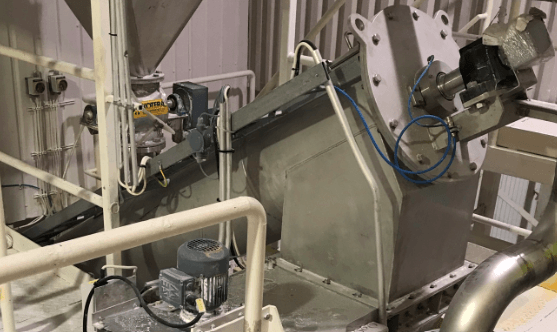
Introduction to screw conveyors
Screw conveyors are an integral part of many industrial processes. They provide an efficient and reliable way to move materials from one place to another. The basic principle of a screw conveyor is simple: a screw-shaped blade rotates in a pipe or chute, moving material forward. This simple but effective mechanism has been in use for centuries.
Screw conveyors are widely used in a variety of industries, including mining, construction and chemicals. Their versatility and durability make them the ideal choice for a wide range of applications. In this article, we look at the use of screw conveyors in industry and the benefits they offer.
Working principle of screw conveyors
The screw conveyor is based on the Archimedes screw, one of the oldest known mechanical devices. In a screw conveyor, a screw-shaped blade rotates around its axis, moving the material forward. This movement can be either horizontal or inclined, depending on the design and purpose of the conveyor.
The efficiency of a screw conveyor depends on several factors, such as the diameter of the screw, the pitch of the thread and the rotation speed. Optimising these factors enables efficient and smooth material transfer, which is particularly important in industrial processes where production downtime can be costly.
Advantages of screw conveyors
Screw conveyors have several advantages over other material handling systems. Firstly, they are highly durable and reliable, making them an ideal choice for demanding industrial environments. They are highly wear-resistant and can handle large quantities of material without significant maintenance.
Secondly, screw conveyors are very versatile. They can move a wide range of materials, including powders, granules and solids. This makes them suitable for a wide range of applications, from mining to construction. In addition, they can operate in both horizontal and inclined positions, which increases their range of applications.
Screw conveyor applications in the mining industry
In the mining industry, screw conveyors play a key role in material handling. They can move large quantities of ore, crushed rock and other minerals efficiently and reliably. Screw conveyors are particularly useful when material has to be moved over long distances or in difficult conditions, such as underground.
Screw conveyors used in the mining industry are often heavy and durable to withstand heavy use and wear. They may also be equipped with special wear-resistant coatings and components that extend their service life and reduce maintenance requirements.
Use of screw conveyors in the construction industry
In the construction industry, screw conveyors are an important part of material handling. They can move a variety of construction materials, such as cement, sand and gravel, efficiently and accurately. This allows construction processes to run smoothly and reduces the need for manual labour.
In the construction industry, screw conveyors are often part of larger material handling systems, which may also include other conveyor and storage solutions. This integrated approach improves efficiency and reduces downtime, which is particularly important in large construction projects.
Use of screw conveyors in the chemical industry
In the chemical industry, screw conveyors play a key role in the transfer of various chemicals and raw materials. They can move powders, granules and liquids accurately and safely, which is particularly important in chemical processes where accurate dosing and mixing of materials is critical.
In the chemical industry, screw conveyors can be equipped with special seals and guards to prevent leakage and contamination. This improves process safety and reduces environmental risks. In addition, screw conveyors can be part of automated systems that improve process efficiency and accuracy.
Maintenance and servicing of screw conveyors
The maintenance and upkeep of screw conveyors are important to ensure their efficient and reliable operation. Regular maintenance can extend conveyor life and reduce downtime, which is particularly important in industrial processes. Maintenance can include, for example, checking the screw and shaft, lubricating bearings and replacing wear parts.
Establishing and following a maintenance programme can help prevent unexpected failures and improve conveyor performance. This can include regular inspections, preventive maintenance and stocking spare parts. A well-maintained screw conveyor can operate reliably and efficiently for many years.
The future outlook for screw conveyors
The future of screw conveyors looks bright as the industry continues to evolve and new technologies are introduced. Automation and digitalisation are bringing new opportunities for the use and management of screw conveyors. For example, intelligent sensors and control systems can improve conveyor efficiency and safety.
In addition, environmentally friendly solutions and energy efficiency are increasingly important factors in industry. Screw conveyors can be part of sustainable solutions that reduce energy consumption and environmental impact. This makes them an attractive choice for future industrial projects.
Summary
Screw conveyors are versatile and efficient devices that play a key role in many industrial processes. Their simple yet efficient operating principle makes them the ideal choice for a wide range of applications, from mining to the chemical industry. Regular maintenance and servicing can improve their performance and lifetime, which is particularly important in industrial environments.
In the future, screw conveyors are likely to evolve further as new technologies and sustainability requirements shape the needs of industry. Automation, digitalisation and environmentally friendly solutions are bringing new opportunities for the use and management of screw conveyors. This will continue to make them an important part of industrial material handling solutions.

You have a challenge that needs solving?
Let us help! Contact us for more information about our products and services.