
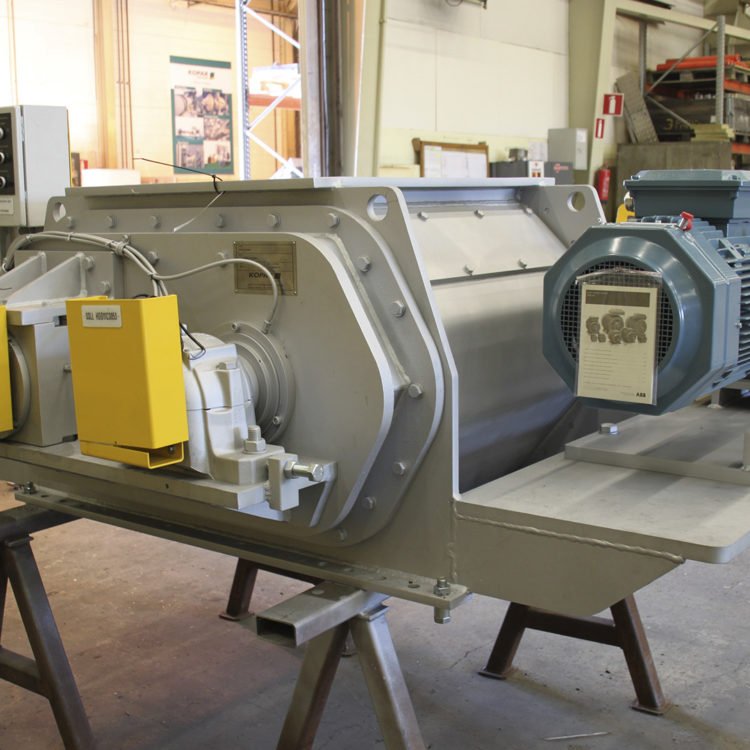
What are crushers?
Crushers are a key component in many industrial processes where massive materials need to be converted into smaller particles. They are particularly important in the process industry, where they can increase production efficiency and improve the accuracy of material handling. Crushers help to reduce material transport costs, improve energy efficiency and optimise storage space, among other things.
When it comes to improving industrial efficiency, crushers are an essential tool. They enable the processing of complex materials, which in turn can lead to lower production costs and reduced environmental impact. The whole process can be better optimised when materials are in the right form for further processing.
How do crushers work?
Crushers work by using mechanical forces such as compression, impact and shearing to break large pieces of material into smaller ones. The basic principle is that crushers use either stationary or moving parts that crush materials to the desired size efficiently. Different types of crushers, such as jaw, cone and impact crushers, are suitable for different applications and types of material.
Technological innovations have led to significant advances in crushers. Today, they can be partially or fully automated, which improves their accuracy and reduces the risks associated with handling. They can also be customised to meet specific material requirements to meet industrial needs, making them highly versatile tools.
Practical applications of crushers in industry
In industry, crushers are widely used in various sectors such as mining, construction materials and recycling. In the mining industry, crushers are indispensable in the processing of minerals and ores, as they allow for efficient separation and further processing of materials. This process is crucial for refining and metal recovery.
In the manufacture of building materials, crushers help turn natural aggregates and recycled materials into usable products such as concrete and asphalt. Crushers are also indispensable in the recycling industry, where they convert waste into reusable raw materials, thus supporting sustainable development and the circular economy.
Common challenges in using crushers
Although crushers are very useful, they can present challenges in their use. One of the most common problems is wear and tear and damage to the equipment, which can be caused by heavy loads and constant use. This can lead to costly maintenance and production downtime if maintenance is not carried out regularly and proactively.
The second challenge relates to the properties of the material to be crushed. If the material is too hard or contains a lot of impurities, it can complicate the crushing process and affect the quality of the final product. This can be overcome by selecting the right crusher and adjusting the process parameters to the specific characteristics of the material.
Comparing the benefits of crushers with alternative methods
Crushers have several advantages over other material handling methods. Firstly, they are highly efficient and capable of processing large quantities of material in a short time. This makes them ideal for industrial applications where production speed and accuracy are critical factors.
Unlike some other methods, crushers are also more environmentally friendly, as they can significantly reduce energy consumption and waste. Although their purchase and maintenance costs may be higher, in the long run they offer cost savings due to their efficiency and durability. Crushers therefore offer a unique combination of performance and durability, making them an ideal choice for many industries.
You have a challenge that needs solving?
Let us help! Contact us for more information about our products and services.