

A pressure conveyor investment is a long-term decision. The wrong choice will be reflected in production for years to come through increased operating costs, recurring downtime, and material waste.
Before making an investment decision, you should know what distinguishes a quality pressure transmitter from a poor-quality one. Discover our pneumatic conveying solutions and find out what your process really needs.
Signs that reveal a low-quality pressure coupler
Poor quality pressure conveyors don't always appear poor in tender responses. Problems are only revealed during use.
Identify these warning signs even before acquisition:
- The editor does not request further information on the material properties before dimensioning.
- The quote is based on a standard solution without process-specific design.
- The materials of the wear parts do not correspond to the abrasiveness of the material being processed.
- Valve solutions are standard components that do not withstand demanding conditions.
- The supplier does not have its own testing operations to ensure the behaviour of materials.
- References are missing or they do not correspond to the conditions of your industry.
The quality of wear parts is particularly decisive. The dense phase, or plug transport method, uses low material velocity, which significantly reduces wear compared to dilute phase solutions. If a supplier cannot justify the advantages of the chosen transport method for your specific material, it is a clear sign of insufficient expertise.
What is included in the total cost of ownership of a pressure conveyor
The purchase price is only part of the total cost. In most cases, it is the smallest part.
The true total cost is comprised of the following factors:
- Energy consumption: Compressed air production is energy-intensive. A poorly dimensioned system consumes significantly more compressed air than is needed.
- Maintenance and wear parts: High material speeds wear out piping, valves, and other components faster. Repeated replacement of spare parts increases costs.
- Unplanned downtime Unexpected hardware stoppage interrupts production. Even a single long downtime can exceed the purchase price of the entire hardware.
- Material waste Open or poorly sealed systems cause material loss and increase cleaning costs.
- Implementation Costs An incorrectly sized system requires modification work after installation, which delays production start-up.
A high-quality pneumatic conveyor pays for itself through lower operating costs, longer maintenance intervals, and improved operational reliability. Discover our pressure conveyor solutions and compare what the different options mean for the total cost of your process.
The editor's expertise in demanding bulk material handling conditions
Choosing a pneumatic conveyor supplier is as important a decision as selecting the equipment itself. The right supplier will understand the behaviour of your material and be able to size the system accordingly.
Ask the editor these questions before deciding:
- Do you have your own testing equipment for pneumatic conveying of materials?
- How do you dimension the system based on the properties of this specific material?
- Do you have references from similar conditions, such as in metallurgy, the energy industry, or the mineral industry?
- Do you design and manufacture critical components, such as valves, in-house?
- How does the system integrate with the facility's control system?
In demanding conditions, such as high temperatures or when handling highly abrasive materials, the manufacturer's experience is crucial. For industrial conveyor solutions, it is not enough for the system to work in a laboratory. It must operate reliably for years in the real conditions of a production environment.
We have almost 50 years of experience in the design, manufacture, and commissioning of pneumatic conveying systems for even the most demanding industrial environments. We continuously test materials in our own test facility, ensuring the system operates according to your specific process requirements. We also manufacture the most critical components, such as dome valves, ourselves, which guarantees quality control throughout the supply chain.
Request a quote for a pneumatic conveying solution for your process
The right pneumatic conveying investment starts with the right questions. Not a standard offer, but a process-specific analysis.
When you contact us, we will find out together:
- Material properties and transport requirements
- The most suitable transport method, plug transport or fluid transport, for your process.
- In accordance with the system's capacity and energy efficiency targets
- Integration into your control system
- Total cost estimate covering procurement, operational, and maintenance costs
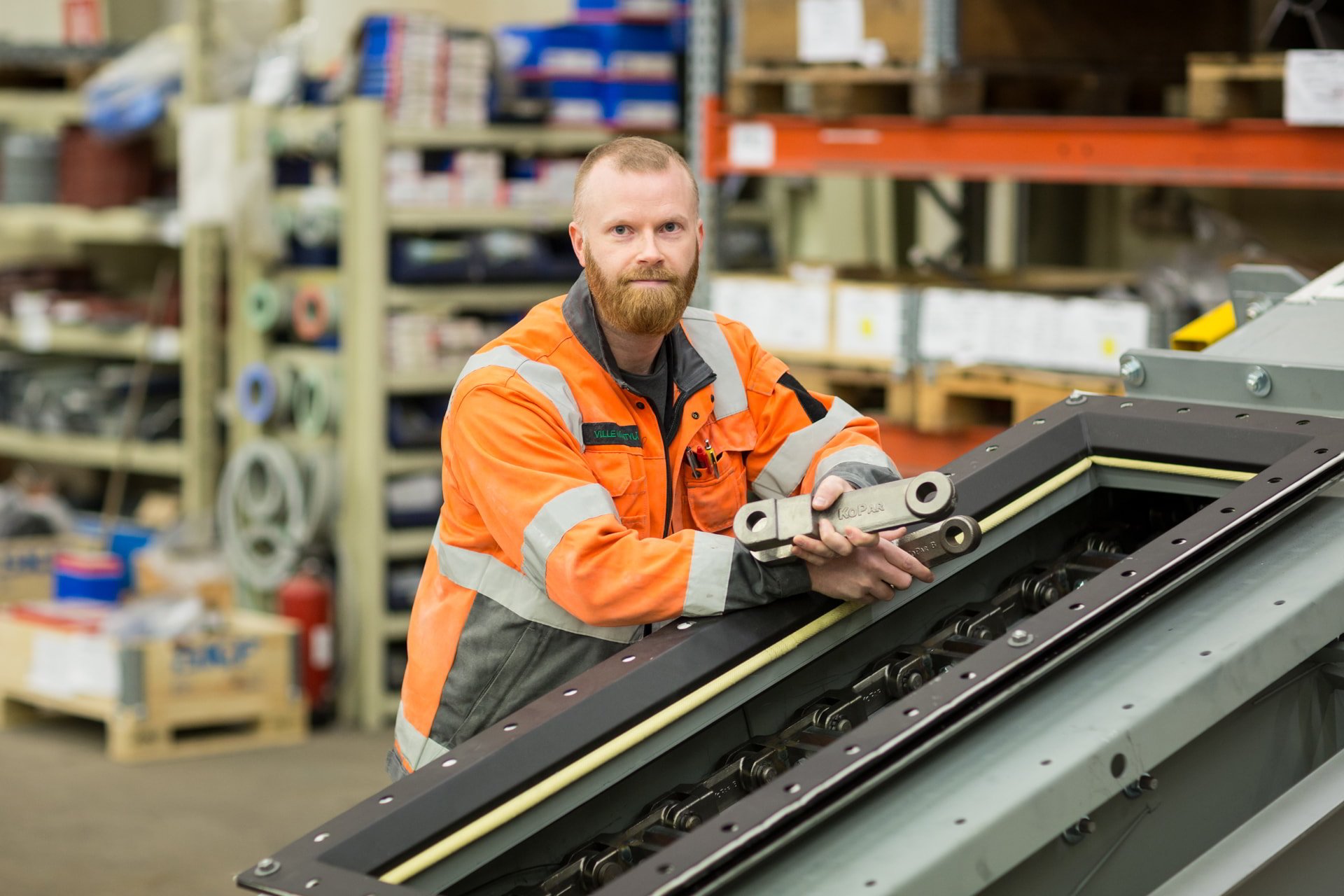
Kopar has supplied hundreds of pressure conveyors to the energy, metallurgy, and process industries. Each project is unique to us, and we approach every challenge with the same care and expertise.
Get in touch and request a quote pressure conveyor solution designed precisely for your process requirements. You can also Explore our pneumatic conveying solutions in more detail before contacting.
You have a challenge that needs solving?
Let us help! Contact us for more information about our products and services.