
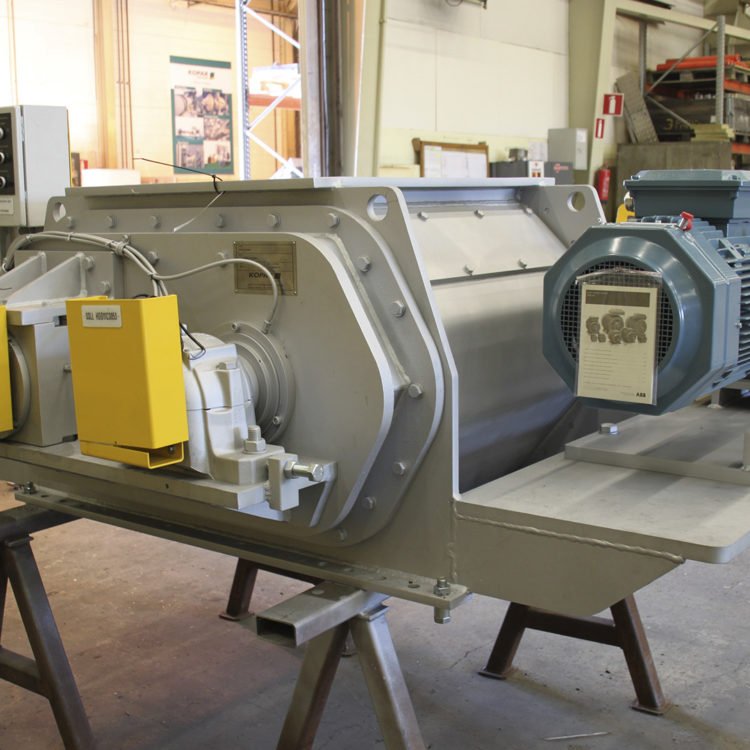
Choosing the right crusher is one of the most critical equipment procurements in an industrial process. the wrong choice directly impacts production efficiency, utilisation rate and lifecycle costs. Crusher type, crushing capacity, crushing ratio and process conditions vary significantly between mining, civil engineering and mineral processing, which is why the selection process requires a systematic approach. In this article, we will go through the key selection criteria: crusher types and their suitability for different materials, technical parameters, process requirements, cost structure, and environmental considerations.
What are the different types of crusher and their uses?
Crushers There are many different types, each with its own uses. Jaw crushers are popular for coarse crushing, as they are effective in reducing large pieces of material. Cone crushers, on the other hand, are suitable for finer crushing and are often used to process medium and smaller materials. Jaw crushers have the advantage of simple design and durability, but can be relatively slow. Cone crushers offer more efficient crushing, but can be more complex to maintain. Knowing these will help you choose the right type of crusher for your process requirements.
What technical features should be considered when choosing a crusher?
Technical characteristics such as crusher power, size, wear resistance and serviceability are key factors in the selection process. The power of the crusher determines how quickly and efficiently it can process the material. Size is important as it affects the requirements of the installation site and the potential production capacity. Wear resistance ensures that the equipment can withstand the stresses of use, reducing the need for maintenance. Maintainability, on the other hand, ensures that the crusher can be easily maintained and repaired, increasing its service life and reducing downtime.
How do the specific requirements of the process influence the choice of the crusher?
Specific process requirements, such as temperature, humidity and particle size, have a significant impact on the selection and operation of the crusher. For example, high temperatures may require special cooling solutions in the crusher. Moisture control is important to prevent material clumping during crushing. Particle size determines the crusher settings and how fine the material can be crushed. These requirements must be taken into account to ensure that the crusher operates optimally and meets the process requirements.
How to maintain and service your crusher efficiently?
Effective maintenance and servicing will ensure that the crusher works reliably and prolongs its lifetime. A regular inspection and maintenance programme helps to detect wear and tear and potential faults in time. The availability and easy replacement of spare parts are also important factors that contribute to smooth maintenance. Trained staff and clear maintenance instructions ensure that the crusher can be quickly returned to service after maintenance.
How is cost-effectiveness taken into account when choosing a crusher?
Cost-effectiveness is an important factor when choosing a crusher. This includes energy efficiency and life cycle costs. Energy-efficient crushers reduce operating costs, which is particularly important in large production plants. Life cycle costs, covering purchase price, maintenance costs and lifetime, help to determine the real value of the investment. Taking these factors into account will help to select a crusher that meets both economic and production objectives.
Environmental considerations in crusher selection
Industrial crushers are energy-intensive machines, and energy consumption is a significant source of environmental burden. Choosing more energy-efficient crushing solutions reduces both operating costs and the carbon footprint of operations – these goals go hand in hand, and there is no need for compromise between them.
Noise emissions are a particularly sensitive issue in urban areas or concerning environmental permits: different types of crushers produce noise profiles with different frequencies and intensities, and this should be taken into account already in the equipment placement and in possible silencers. Dust control, on the other hand, is both a work safety and an environmental issue – enclosed structures, watering systems, and filter solutions are standard equipment in demanding locations. The crushing of recycled materials places additional demands on the equipment, but at the same time enables operation in line with the circular economy, where construction waste and surplus materials are reused.
Conclusions and recommendations for crusher selection
Crusher the choice of a product for an industrial process requires careful consideration. Key factors include the type of material, process requirements, crusher specifications and cost-effectiveness. Each process is unique and the crusher should be selected to support production objectives and be in line with environmental considerations. Choosing the right crusher can significantly improve production efficiency and reduce environmental impact. We recommend that you contact our experts for more information and advice on choosing the right crusher.

You have a challenge that needs solving?
Let us help! Contact us for more information about our products and services.