
Introduction
How does a redler differ from traditional ash conveyors? When considering this question, it is important to note that the redler and the coke conveyor are in fact synonymous. This means that in practice there are no concrete differences between these terms. However, even though they are synonymous, it is interesting to look at why these devices are used and what advantages they offer over traditional conveyor systems. What innovations and solutions have been developed around these conveyors and how have they evolved over time?
What is a redler and a kolakuletin?
Redler and kola conveyor are equipment designed to transport hot ash efficiently and safely. The operation of these conveyors is based on chain-mounted tripods or paddles moving in a closed or partially closed channel. This mechanism allows the material to be transported to the desired location, making the process both efficient and safe.
Triple conveyors are particularly useful in industrial applications where the transfer of hot ash is essential. They can handle large volumes of material in continuous operation, which is critical in many production processes. In addition, these conveyors can be equipped with various additional features, such as water cooling, making them even more versatile.
Synonymously, the redler and the kolakulet offer the same advantages and functions. They are crucial equipment for achieving efficiency and safety in hot material handling, and their applications vary according to the needs of different industries.
How do traditional ash conveyors work?
Traditional ash conveyors often use belt or screw conveyor mechanisms, which are not always best suited to handling hot or abrasive materials. These systems can require more space and wear out faster during intensive use, increasing maintenance requirements and costs.
Conventional conveyors can be open or closed in design, but their ability to control dust and splashes is often limited. This can lead to environmental contamination and increased safety risks in the workplace. In addition, conventional conveyors can have higher energy consumption, making them less economical in the long term.
It is important to note that although traditional ash conveyors have been in use for a long time, their weaknesses have led to the development of more innovative solutions, such as redlers and piston conveyors.
The role of the Copper in ash transport technology
Kopar has been at the forefront of the development of ash handling technology, drawing on decades of experience and expertise. Our innovative solutions have helped reduce the environmental impact of industrial processes and improve their efficiency.
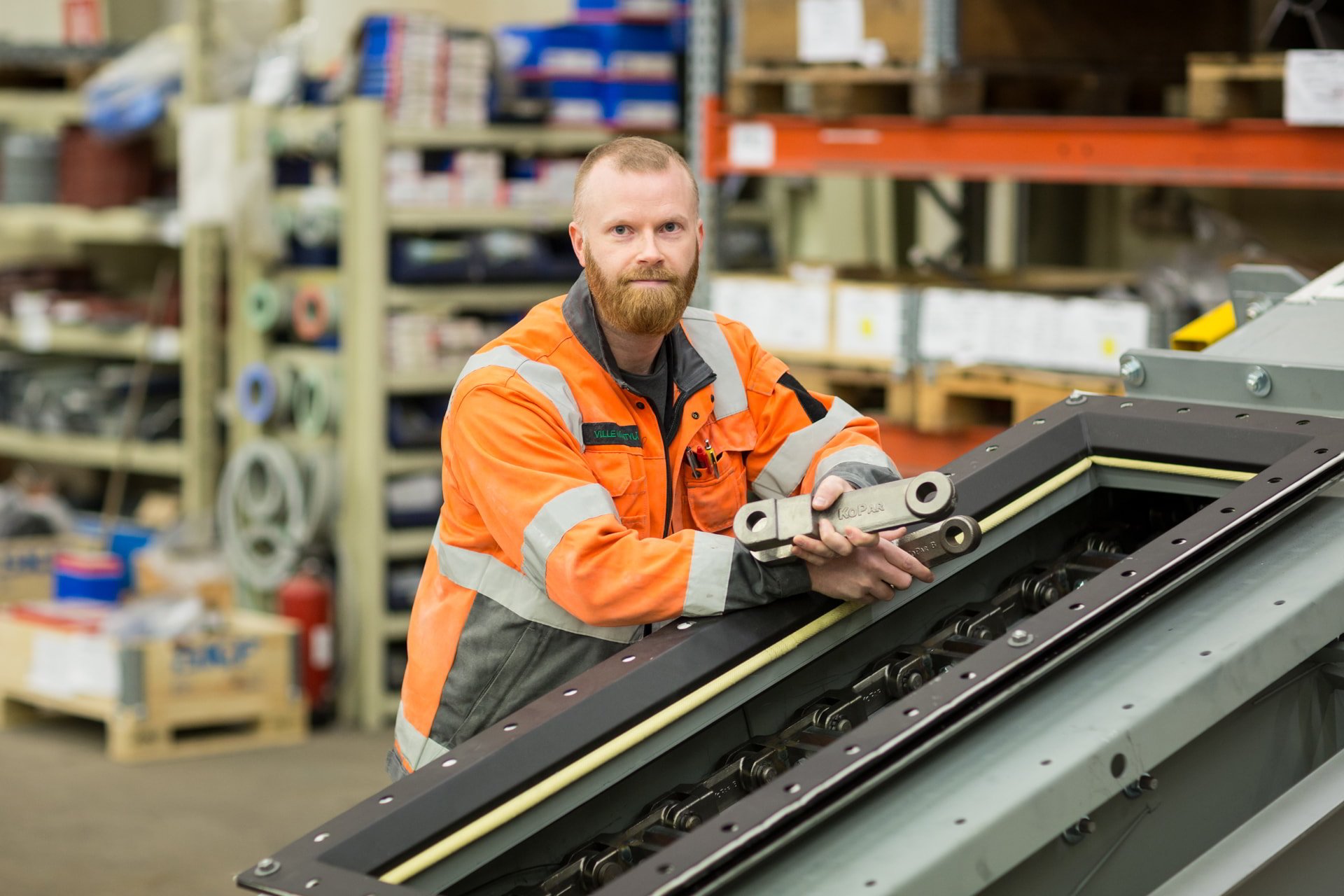
In particular, the piston conveyors developed by Kopar are designed to withstand even the most demanding conditions. We use high quality materials such as boron steel, which ensures the durability and performance of our conveyors even in extreme temperatures.
Summary
In this article, we have looked at how the redler and the kolakul conveyor differ from traditional ash conveyors, although they are synonymous. We have explored how these advanced conveyor systems work and the benefits they offer to the industry. In particular, the efficiency, space efficiency and lower maintenance requirements of the redler make it an attractive alternative to traditional systems.
Kopar's role in this sector is significant, as we provide innovative and sustainable solutions that support the green transition of industry. Our customers are encouraged to take a closer look at the solutions we offer, which can improve their production processes and reduce their environmental impact.
You have a challenge that needs solving?
Let us help! Contact us for more information about our products and services.