
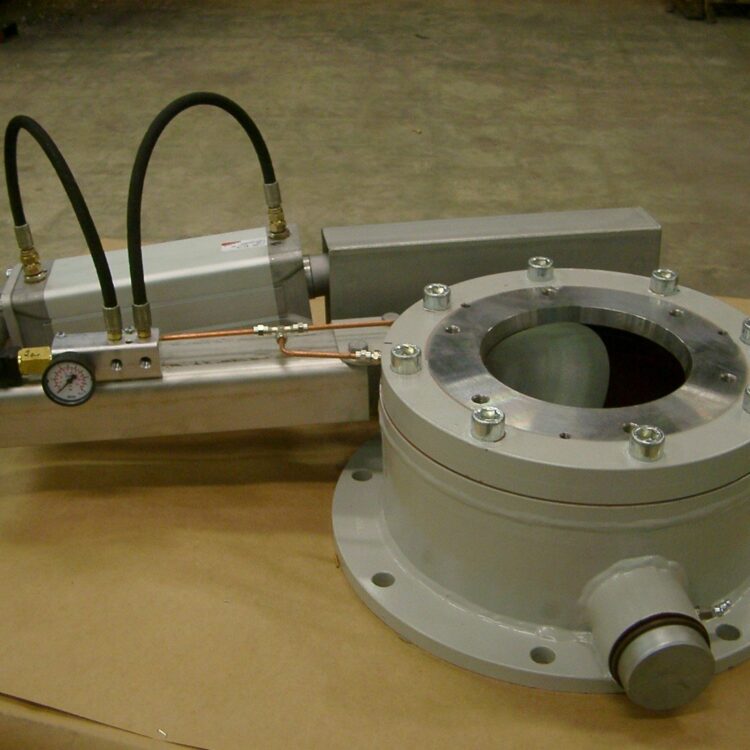
What is a dome valve?
The dome valve is a special type of valve designed to provide excellent tightness and durability. Its design allows the valve to open and close perfectly, reducing wear and extending the life of the valve.
Diaphragm valves are particularly popular in industrial process systems where fast and safe flow control is required. Their versatility and ease of use make them an excellent choice for a wide range of applications.
Advantages of a dome valve
One of the most significant advantages of a butterfly valve is its ability to open completely to the side of the material flow. This reduces wear and extends the life of the valve. In addition, dome valves are known for their excellent tightness, which is essential in harsh operating conditions.
Maintenance of the ball valve is also simple and quick. Valve replacement can be completed in as little as an hour, minimising maintenance downtime and allowing the plant to quickly return to normal operation. This makes the diverter valve a very cost-effective solution in the long term.
Diaphragm valve vs. ball valve
Ball valves are another commonly used type of valve, offering good tightness and durability. A ball valve consists of a rotating ball with a hole that opens and closes when the flow is adjusted. Although efficient, ball valves do not always offer the same wear resistance as globe valves.
Diaphragm valves differ from ball valves in that they open completely to the side of the material flow. This reduces wear and extends the life of the valve. In addition, they are often easier to maintain and replace, making them a more cost-effective option for many applications.
Diaphragm valve vs. butterfly valve
Butterfly valves are lightweight and compact valves that are well suited for high flow rates and low pressures. They consist of a rotating disc that opens and closes when the flow is adjusted. Butterfly valves are inexpensive and easy to install, but do not offer the same tightness and durability as butterfly valves.
Diaphragm valves offer improved tightness and durability in demanding operating conditions. They are also easier to maintain and replace, making them a better choice for many industrial applications where tightness and durability are essential.
Diaphragm valve vs. sliding valve
Slide valves are traditional valves consisting of a sliding disc that opens and closes as the flow is adjusted. They are well suited for high flow rates and high pressures, but do not offer the same tightness and durability as butterfly valves.
Diaphragm valves offer improved tightness and durability in demanding operating conditions. They are also easier to maintain and replace, making them a better choice for many industrial applications where tightness and durability are essential.
Applications of the dome valve
Diaphragm valves are widely used in a variety of industrial process systems where fast and safe flow control is required. They are particularly popular in marine water systems and fuel transfer systems because of their reliability and durability.
The versatility, durability and ease of use of the ball valve make it a popular choice for a wide range of industries and applications. They are at their best in demanding operating conditions where tightness is essential and where abrasive materials are handled.
Summary
Diaphragm valves provide excellent tightness and durability in demanding operating conditions. They differ from other valve types such as ball valves, butterfly valves and gate valves by offering better wear resistance and easier maintenance.
Diaphragm valves are versatile and easy to use, making them an excellent choice for many industrial applications. Their ability to open fully to the side of the material flow reduces wear and extends valve life, making them a cost-effective solution in the long term.

You have a challenge that needs solving?
Let us help! Contact us for more information about our products and services.