
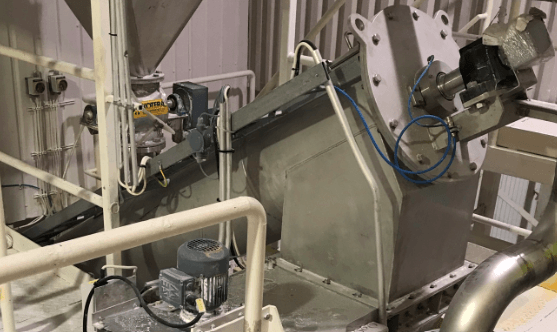
Screw conveyors are a key component of many industries, including the chemical, waste treatment and mining industries. They provide an efficient and versatile solution for the transfer and handling of a wide range of materials.
Screw conveyors are also known as screw conveyors or screw conveyor systems. They usually consist of a screw that rotates in a tube or chute, moving material forward. This simple but effective mechanism allows large quantities of material to be moved quickly and reliably.
Screw conveyor structure
The basic structure of a screw conveyor consists of a screw, a tube or chute, a motor and bearings. The shape and size of the screw may vary depending on the application. The most commonly used screw types are the solid screw, the band screw and the double screw. Each type has its own advantages and applications.
The tube or chute in which the screw rotates can be either open or closed. A closed system reduces material waste and dust, which is particularly important for environmental protection and occupational health. A motor rotates the screw, and bearings support the rotation of the screw, reducing friction and wear.
Working principle
The screw conveyor works by rotating a screw, which moves the material forward in a pipe or chute. As the screw rotates, it creates a force that pushes the material forward. This process is continuous, allowing the material to be moved smoothly and efficiently.
Screw conveyors can operate in both horizontal and vertical positions. In the horizontal position they are particularly suitable for long distance material transfer, while in the vertical position they are ideal for crossing height differences.
Handling of materials
Screw conveyors are very versatile and suitable for handling a wide range of materials. They can handle both fine powders and larger solid pieces. This makes them an excellent choice for many industries that require the transfer and handling of different materials.
For example, in the chemical industry, screw conveyors can move chemical powders and raw materials, while in waste management they can move solid waste and recycled materials. In the mining industry, screw conveyors are useful for moving ores and minerals.
Efficiency and versatility
Screw conveyors are renowned for their efficiency. They are able to move large quantities of material quickly and reliably. This makes them an excellent choice for processes where large material flows are required. In addition, screw conveyors are highly energy efficient, which reduces operating costs.
Versatility is another major advantage. Screw conveyors can be tailored to meet specific needs, such as material type, transfer distance and installation environment. This makes them suitable for a wide range of applications and industries.
Closed system
The closed screw conveyor system offers several advantages. Firstly, it reduces material waste because the material remains in a closed space throughout the transfer process. This is particularly important when handling valuable or sensitive materials.
Secondly, the closed system reduces dust and improves the safety of the working environment. Dust can be harmful to both workers and equipment, so minimising dust is important. A closed system also helps to keep the working environment clean and orderly.
Service and Maintenance
Servicing and maintenance of screw conveyors are relatively simple. Regular inspection and maintenance will ensure that the equipment is working optimally and reduce the risk of unexpected downtime. The most important maintenance operations include inspection and lubrication of the screw, bearings and motor.
It is also important to check that the screw conveyor is correctly aligned and free from excess wear or damage. Regular maintenance will prolong the life of the equipment and ensure its efficient operation in the long term.
Summary
Screw conveyors are versatile and efficient pieces of equipment that offer an excellent solution for the transfer and handling of different materials. Their design and operating principle make them reliable and energy-efficient, and they are suitable for a wide range of industries.
The closed system reduces material waste and dust, while improving the safety of the working environment. Regular maintenance and servicing ensure long life and efficient operation. Screw conveyors are therefore an excellent choice for many industrial applications.

You have a challenge that needs solving?
Let us help! Contact us for more information about our products and services.