
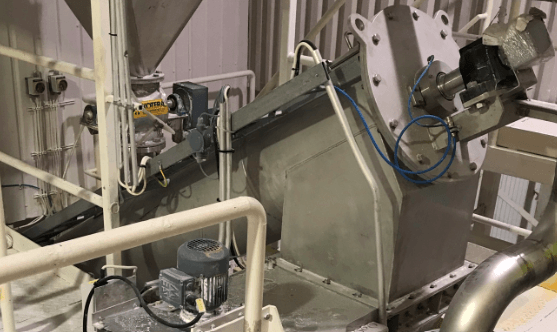
What is a screw conveyor?
A screw conveyor is a mechanical device that uses a rotating screw to move material. This device is particularly useful when handling bulk materials such as powders, granules and other solids. The basic components of a screw conveyor include the screw shaft, the chute and the motor that rotates the screw.
Screw conveyors are widely used in various industries due to their simple design and efficiency. They are particularly popular because they can move material both horizontally and at an upward angle, making them extremely versatile.
Advantages of screw conveyors
Screw conveyors have several advantages that make them an excellent choice for many applications. Firstly, they are highly efficient at moving material. Screw conveyors can handle large quantities of material quickly and reliably.
Secondly, screw conveyors are very durable and require little maintenance. Their simple design means they have fewer moving parts that could break. This reduces downtime and maintenance costs.
Industries where screw conveyors are used
Screw conveyors are widely used in various industries. In the mining industry, for example, they are essential for moving ore and other minerals. They are also common in the construction industry, where they are used to transport cement and other building materials.
In energy production, screw conveyors are important for the transport of fuels such as coal and biomass. They are also common in waste management, where they are used to process recycled materials and waste.
Design and customisation of screw conveyors
Screw conveyors can be designed and tailored to meet specific needs and requirements. This means that they can be adapted to handle different materials and capacities. For example, the diameter and length of the screw can be adjusted to meet specific transport requirements.
In addition, screw conveyors can be equipped with various accessories, such as heating systems or cooling systems, which allow the temperature of the material to be controlled during transport. This makes them highly versatile and suitable for a wide range of applications.
Maintenance and servicing of screw conveyors
Although screw conveyors are generally low-maintenance, regular inspection and maintenance are important to ensure their optimal performance. This includes checking the screw and chute for wear and lubricating the motor and other moving parts.
It is also important to check that the screw conveyor is correctly aligned and that all the fasteners are firmly in place. This will help prevent possible malfunctions and prolong the life of the equipment.
Security aspects
Safety is an important factor when using screw conveyors. Their enclosed design reduces the risk of workers coming into contact with moving parts. This reduces the risk of accidents and injuries.
It is also important that screw conveyors are equipped with appropriate safety devices, such as emergency stop buttons and protective housings. These measures help to ensure that the equipment is safe to use and that any potential hazards can be quickly controlled.
Summary
Screw conveyors are versatile and efficient devices suitable for a wide range of industrial applications. Their simple design, durability and low maintenance requirements make them an excellent choice for material handling.
Whether in the mining, construction or power generation industries, screw conveyors offer a reliable and cost-effective solution. Regular maintenance and appropriate safety measures ensure that they operate optimally and safely.

You have a challenge that needs solving?
Let us help! Contact us for more information about our products and services.