

Detachable chain conveyors represent the most advanced technology in mechanical material handling, particularly in extreme operating conditions. When industrial processes require reliable bulk material transport in high temperatures and abrasive conditions, the detachable chain conveyor offers durability and performance that traditional solutions cannot match.
In metal refining, the steel industry, and smelters, maintenance managers constantly face the same challenge: why do conveyor chains wear out faster than expected and how can their lifespan be extended? The answer often lies in understanding the chain's structure, material choices, and holistic design. Discover the features of forged link conveyor chains ja selvitä, miksi ne ovat tulleet välttämättömiksi vaativimmissa teollisuussovelluksissa.
Mikä on takalenkkinen kuljetinketju ja mihin sitä käytetään?
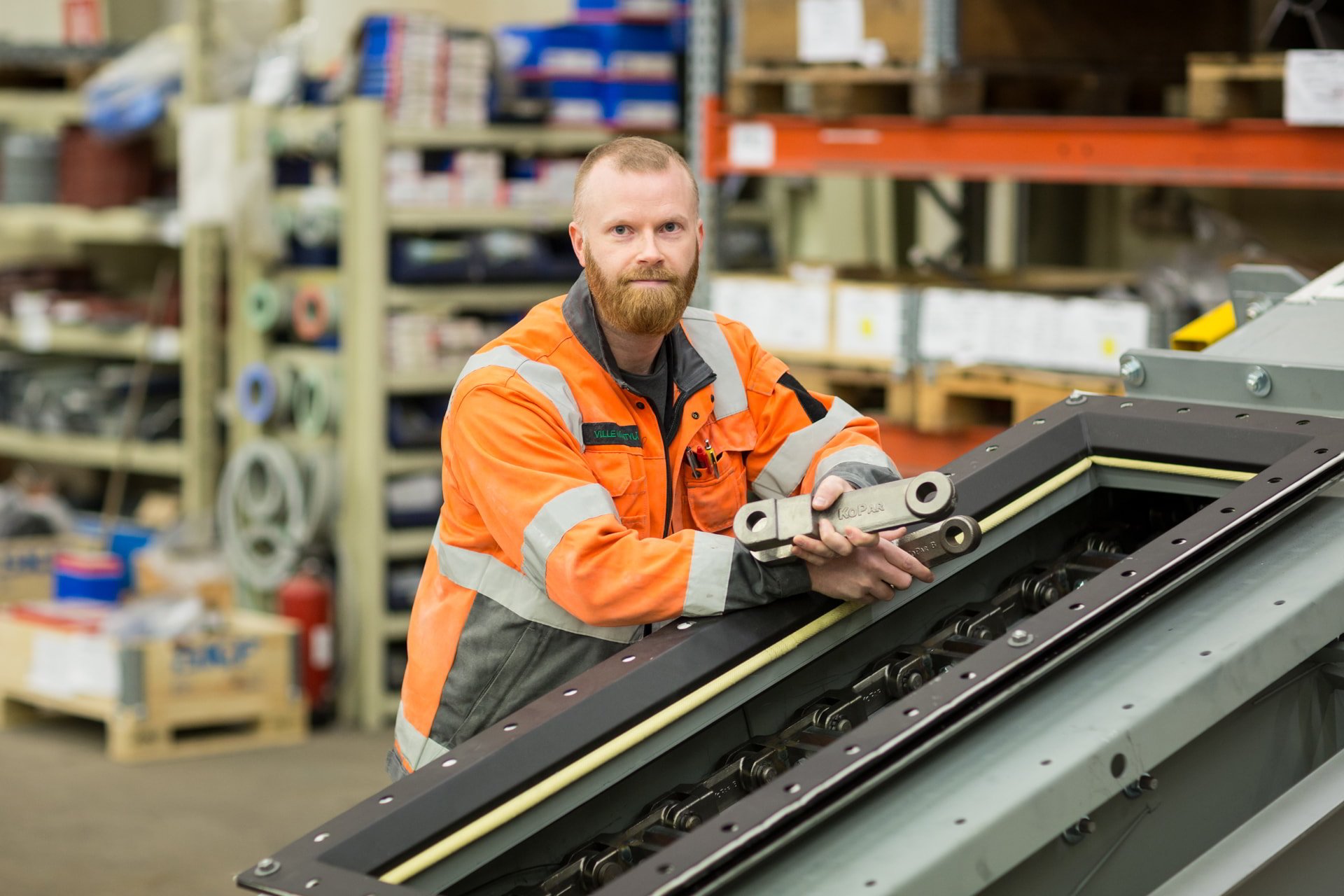
A forged link conveyor chain is a custom-made industrial chain whose links are forged from a single piece of steel to achieve maximum strength and durability. It is specifically designed for demanding bulk material conveying applications where standard conveyor systems cannot withstand the operating conditions.
The applications for linked chains are primarily focused on the metallurgical industry and processes involving extreme conditions. In furnaces, waste heat boilers, and metal refining, the chains operate under continuous tensile load at temperatures that can reach 300–400 degrees Celsius. In these applications, the material being transported often consists of large and irregular accumulations, which cause impact-like loads.
The special properties of link chains come to the fore specifically in these challenging conditions. While a regular manganese chain loses its strength at high temperatures, a link chain made of boron steel retains its mechanical properties. This makes it an essential choice in industries where operational reliability is critical and unexpected chain failure can cause significant production stoppages.
How does a double-flex conveyor chain work in practice?
A drag conveyor chain works by pulling a material load along a conveyor track, where sprockets guide its movement and maintain continuous traction. The chain's links distribute the load evenly across the entire structure, allowing for the safe transfer of large quantities of material.
In practical operation, the performance of the chain depends on several critical factors. Firstly, the chain's material determines its durability at high temperatures. A boron steel chain maintains its tensile strength and surface hardness better than traditional manganese steel, which is crucial under continuous load.
The chain's operation is also supported by careful temperature control. The optimal operating temperature range of 250–400 °C balances the chain's mechanical properties and internal corrosion risk. Too low a temperature can lead to problems caused by the acid dew point, while too high a temperature weakens the chain's properties.
Structural protection is another core operating principle. The chain is protected from both radiant heat and impact from objects, which prevents deformation and premature wear. Compensation for thermal expansion ensures that sealing is maintained across the entire operating range and minimizes dust leakage.
When is a chain conveyor with a return slider the best option?
A roller conveyor chain is the best option when the operating temperature exceeds 200 °C, the material is particularly abrasive, or when higher tensile strength is required than what conventional chains offer. It is an essential choice in metallurgical processes and smelters.
The decision to choose a return chain should be made when the current chain is not achieving its expected service life or when the procession conditions have become more challenging. Particularly in situations where chains have to handle hot dust, abrasive material and occasional large material accumulations, the return chain shows a clear advantage.
A cost-benefit analysis supports the use of roller chains in the long term. Although the initial investment is higher, the chain's extended lifespan, reduced maintenance downtime, and improved reliability make it economically viable. For maintenance managers, this translates into more predictable maintenance and fewer unexpected production stoppages.
Technically, a loop-back cable is a justified choice when:
- Continuous operating temperature exceeds 200 °C
- The process involves impact loads
- The material to be transported contains large accumulations
- The current chains' replacement intervals are too short
- Process safety requires a high degree of operational reliability
The comparison table helps to outline when switching to a rear derailleur chain is justified:
Comparison of chain types in operating conditions:
- 142V-manganese chain max. 200 °C, basic applications, nominal breaking strength 520
- 216W-boron steel chain: 300–400 °C, demanding conditions, nominal tensile strength 750 (44 % higher)
When making an investment decision, it is important to evaluate the overall picture in addition to the chain material. The design of the conveyor system, control of thermal expansion, and control of particle size critically affect the chain's performance regardless of material choice.
If your process experiences these challenges or you want to ensure the next chain selection is optimal for your operating conditions, Discover the technical features of boron steel forged link chains. and find out how they can improve the reliability of your process. A holistic approach to chain selection and conveyor system design ensures the best possible outcome, even in the most demanding conditions. Contact us and let's find out how tack-link conveyor chains could improve your process efficiency and operational reliability.
You have a challenge that needs solving?
Let us help! Contact us for more information about our products and services.